

Natural Wine
WHAT IS NATURAL WINE?
Natural wine is made with minimal intervention — fermented with wild yeasts, unfiltered, and without additives or chemical adjustments. The result: wines that are alive, expressive, and true to their origin.
That's the short version. The longer one is that natural wine doesn't have a legal definition — no certification, no governing body, no official rulebook. What it does have is a shared philosophy: as little as possible in the vineyard, even less in the cellar.
Most natural winemakers farm organically or biodynamically — no synthetic pesticides, herbicides or fertilisers. The grapes do their own work. In the cellar, fermentation starts with the wild yeasts already present on the grape skins rather than commercial yeasts added from a packet. The wine is not fined, not filtered, and bottled with little or no added sulfites. What you get is wine that tastes like somewhere and someone made it.
HOW IT DIFFERS
Conventional wine production allows for more than 70 legal additives in the EU — commercial yeasts, fining agents, tartaric acid, tannin powder, colouring agents, and sulfites at levels up to five times what most natural producers use. None of this appears on the label.
Natural wine strips that back. No fining, no filtering, no chemical corrections — just grapes, time, and good judgement.
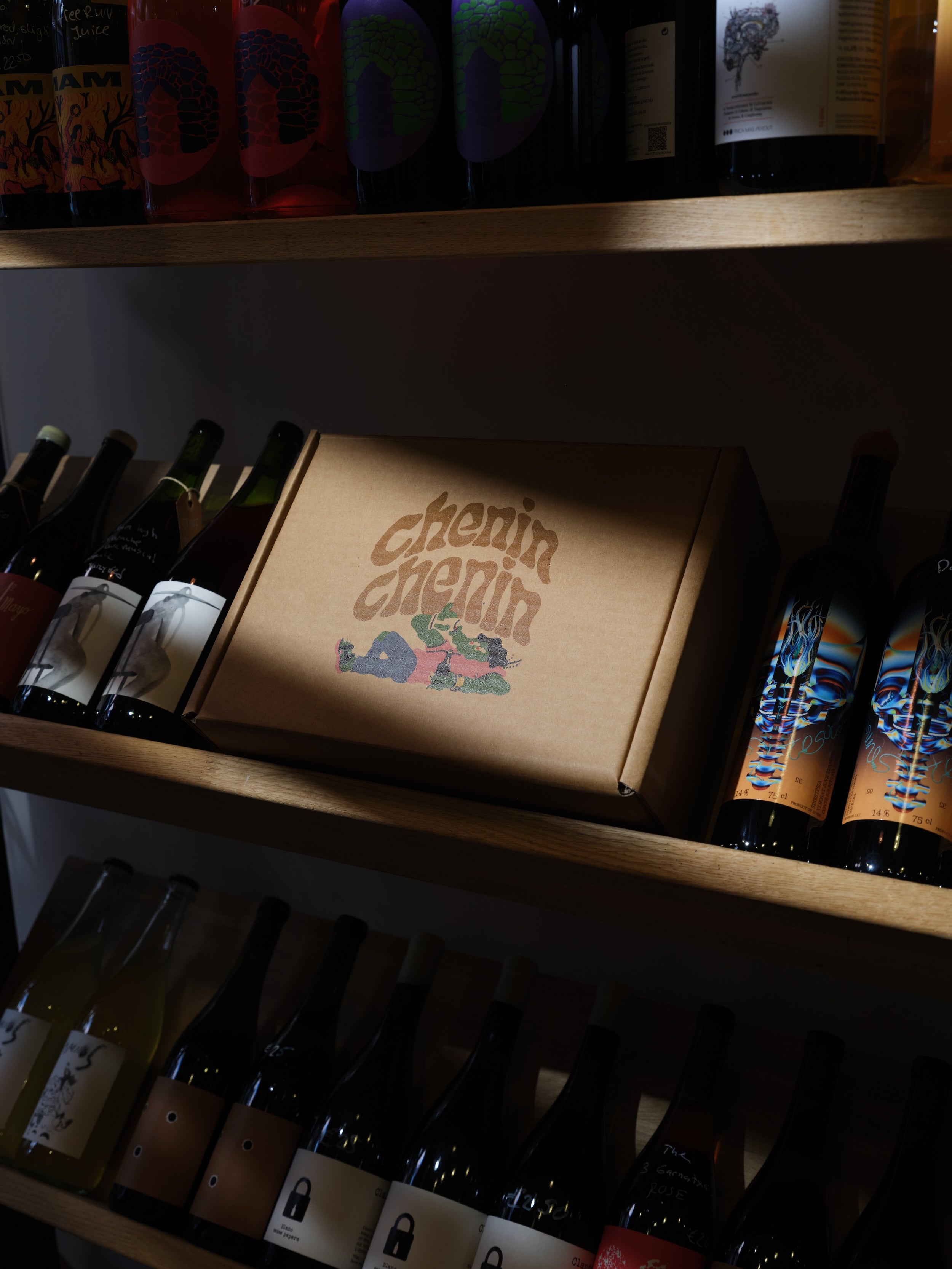
At Chenin Chenin, we focus on producers who make wines that are alive, but never messy — clean, expressive, and made to be drunk, not just talked about. That rules out a lot. The natural wine world has its fair share of bottles that are interesting in theory and unpleasant in practice. We taste everything before it lands on our shelves.
NATURAL WINE VS ORGANIC VS BIODYNAMIC
These three overlap but aren't the same thing.
Organic wine means the grapes were farmed without synthetic chemicals, and the winemaking follows EU organic certification rules — which still permit a significant list of cellar additives. It's a starting point, not a destination.
Biodynamic farming goes further — it treats the vineyard as a living ecosystem, following a planting calendar and using specific preparations to build soil health. Demeter is the main certification. Many of the most respected natural winemakers farm biodynamically, though not all certify.
Natural wine takes the logic of both and applies it in the cellar too. The goal is the same from vine to bottle: as little interference as possible. Most natural winemakers avoid certification altogether — the work speaks for itself.
COMMON MISCONCEPTIONS
Natural wine isn't always cloudy or funky. That reputation comes from a period in the 2010s when some producers prioritised provocation over quality — wines that were natural by philosophy but frankly hard to drink. The best producers today craft wines that are precise, vibrant, and stable — often indistinguishable in clarity and balance from conventional wines.
It also doesn't have to be orange. Orange wine is one style within natural wine, made by fermenting white grapes on their skins. It's had a lot of attention, deservedly, but natural wine covers the full range — crisp whites, deep reds, pét-nats, skin-contact, light-bodied, full-bodied. The colour of the wine in your glass tells you nothing about how it was made.
And no, natural wine doesn't go off faster than conventional wine. A well-made natural wine is stable. Some develop beautifully over years. The ones that don't last were usually flawed to begin with.
STYLES TO DISCOVER
Natural wine covers every colour and style, and the range is genuinely wider than conventional categories suggest.
Crisp, mineral whites from producers farming in limestone soils. Orange wines with texture and grip that conventional whites can't touch. Wild, low-intervention reds from southern Europe that drink like nothing else. Pét-nats — pétillant naturel — sparkling wines that finish their fermentation in the bottle, cloudy, lively, and completely their own thing. Jura classics from France's most singular wine region. Skin-contact whites that sit somewhere between orange and white and resist easy description.
Each one tells the story of its maker and terroir. That's the point.
→ Explore orange wines, pét-nats, and Jura classics in our collection.
WHERE TO START
If you're new to natural wine, start with a producer rather than a style. Find someone whose wines you like and follow them. That's how the natural wine world works — it runs on people, not brands.
At Chenin Chenin we import directly from a handful of small European producers we know personally. That means we can tell you exactly how the wine was made, what vintage conditions were like, and whether to drink it now or wait. It also means the wines on our shelves are there because we chose them, not because a distributor had availability.
SHOP NATURAL WINE
Explore our full selection of hand-picked bottles from small European producers.